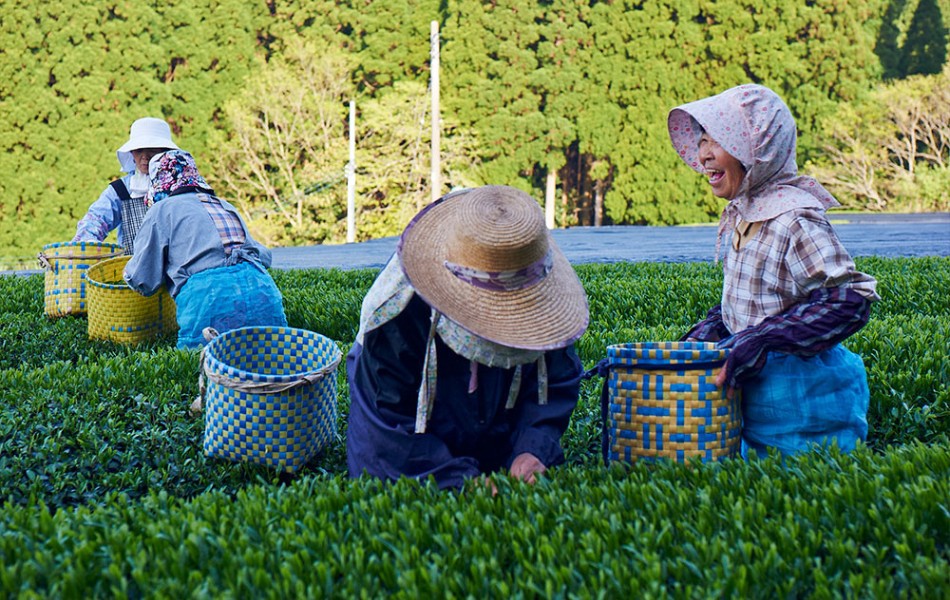
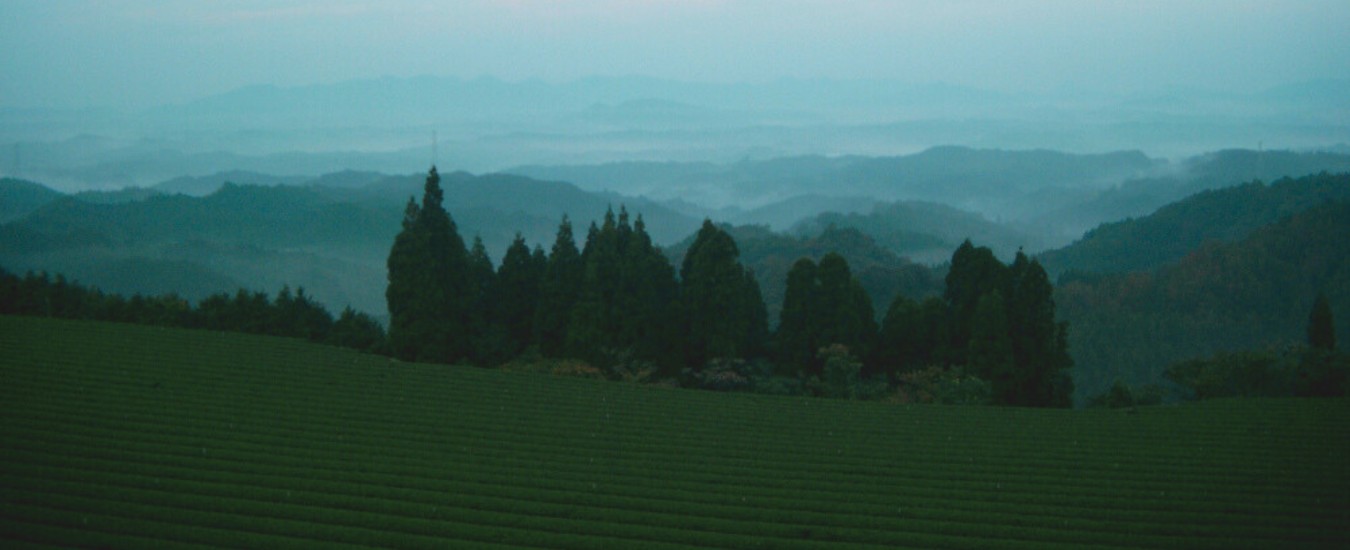
The foot of Mt. Kirishima has long been said to be the home of tengu, or “heavenly goblins”.
In the midst of this great nature, Kirishima, we are making tea with the special care that is only possible in Kirishima.
Kirishima’s clean air, pure water, rich soil, and deep fog, and deep fog.
It can be said that Kirishima is an ideal place for tea. Kirishima is an ideal place for tea.
We are committed to producing tea that everyone can drink with peace of mind.
We are aiming to produce better tea with a focus on human- and eco-friendly agriculture.
Please come and visit us. The people and the earth will be more than happy to entertain you.
Communication with tea plantation
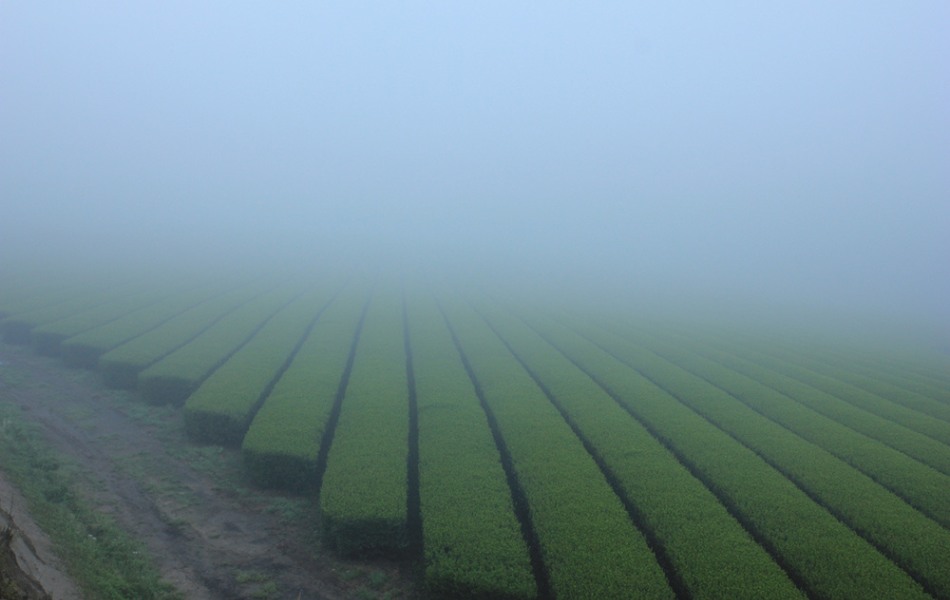
A day at Nishi Tea Factory begins in the morning. Every morning, our president makes the rounds of the 60 hectares of tea plantations, using all five senses to read the expressions of the fields.
Based on the condition of the fields, he determines what the fields need to be done and how to care for them today.
This is something that can only be done by tea farmers who have cultivated a serious relationship and dialogue with “tea” over many years.
Management analysis
The Nishi Tea Plant also carries out thorough data-based management. By conducting soil analysis and product analysis for each field, we are able to thoroughly manage even the invisible aspects of our operations.
Powerful & rapid footwork
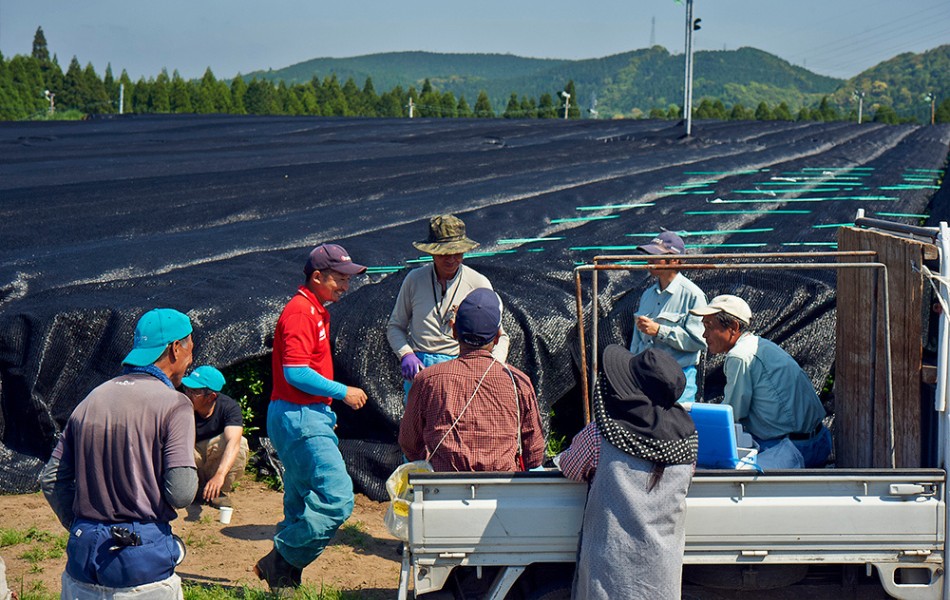
Nishi Tea Plant has vast tea plantations, but to manage them without compromising quality requires skilled management and a flexible and agile response.
Nishi Tea Plant uses the youthfulness of its employees, whose average age is in their 30s, to achieve powerful and agile footwork to further improve the condition of the tea.
Growing with the land of Kirishima
People are not the only ones growing tea at Nishi Tea Factory. Our tea plantation is located at the foot of the Kirishima mountain range.
For example, the surrounding trees protect us from strong winds and pesticides sprayed by other farmers. The wild birds and carnivorous insects that live in the forests eat the pests that are harmful to tea.
This rich land and the nature of Kirishima nurtures delicious tea.